Turn Compliance Pressure Into a Practical IT Action Plan
Regulatory pressure gets harder to manage when every new requirement becomes a separate spreadsheet, meeting, ticket, or last-minute request. Small teams need a repeatable way to turn obligations into IT work they can understand, prioritize, and prove.
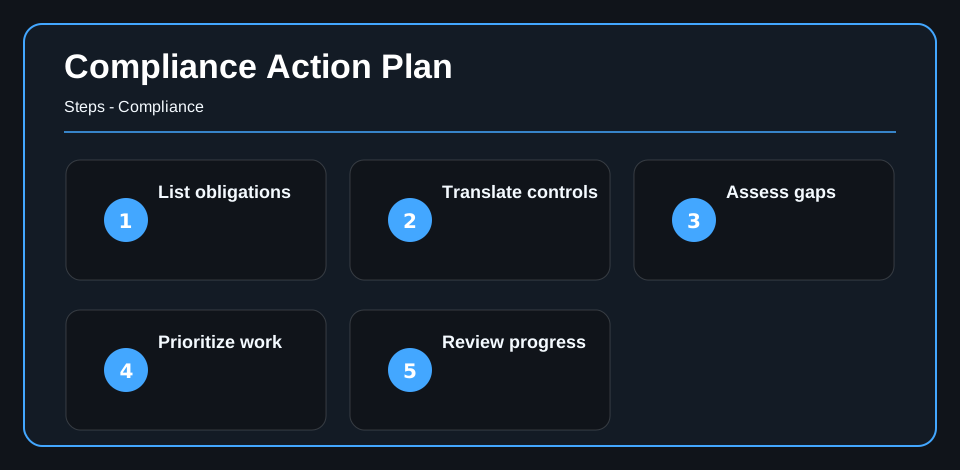
The goal is not to make compliance feel bigger than it already is. The goal is to create a practical response engine: a simple operating rhythm for tracking requirements, translating them into controls, deciding what matters first, and reviewing progress before deadlines become emergencies.
Start with the regulatory landscape
Before choosing tools or assigning tasks, build a clear inventory of the obligations that may require IT action. That inventory should connect each requirement to the business context, the systems involved, the data affected, and the teams that need to participate.
This keeps compliance work from becoming fragmented. If each department interprets requirements on its own, the business can end up with duplicated effort, inconsistent decisions, and gaps that are hard to explain later.
For a broader view of compliance-aware support, the EZ Support compliance information page explains how security, monitoring, and practical guidance fit into everyday service delivery.
Translate requirements into controls
A requirement only becomes useful when the team can turn it into work. That means separating the expected outcome from the internal control activity. A control might involve access review, logging, backup testing, vulnerability management, endpoint monitoring, policy updates, or evidence collection.
AI-assisted analysis can help organize requirements and compare them against existing controls, but it still needs human oversight. Someone has to confirm the context, decide what the business can realistically do, and make sure the output becomes accountable work rather than a pile of suggestions.
If monitoring evidence is part of the control plan, computer monitoring can help collect visibility that supports both security operations and audit readiness.
Assess the gap before building the roadmap
Once requirements and controls are clear, compare them against the current environment. The question is simple: what is already in place, what is missing, what is weak, and what evidence would show the control is working?
This gap view helps the team avoid random compliance activity. It also helps leaders see the difference between a paperwork issue, a technical control gap, and a larger operational risk.
For security planning, a security strategy roadmap for growing teams can help connect business needs, risk pressure, control gaps, and practical priorities.
Prioritize work by deadline, risk, and effort
Not every compliance task carries the same urgency. Some work has a fixed deadline. Some work reduces a high-impact risk. Some work is quick and removes friction from several requirements at once.
Prioritization should consider timeline, dependency, cost, effort, and impact. That keeps the team from treating every open item as equal. It also helps leaders decide what to fund, what to schedule, what to accept temporarily, and what must be handled before a deadline.
An IT risk register can support this decision by recording the risk, likely impact, response, owner, and next review date.
Build a roadmap people can follow
A useful compliance roadmap turns the priority list into owned work. Each initiative should have a clear outcome, owner, dependency, target date, and evidence expectation. The roadmap should also show which items depend on other teams, vendors, systems, or leadership decisions.
This does not need to become a heavy program. For small teams, a practical roadmap can be enough: what needs to happen, who owns it, what proof will be collected, and when progress will be reviewed.
If compliance work overlaps with managed security monitoring, managed SIEM can help organize logs and alerts so the team has better evidence and operational context.
Review and adapt as requirements change
Regulatory work does not stay still. Requirements change, business systems change, and the team’s capacity changes. A response process should include regular review so the inventory, controls, gaps, and roadmap do not go stale.
Review should answer a few direct questions. Are the obligations still accurate? Are controls working as expected? Are open initiatives moving? Are deadlines at risk? Does the evidence match what the business needs to show?
That review habit turns compliance from a scramble into a manageable support process.
What to do next
Pick one regulation, customer requirement, or audit pressure that is already creating IT work. Write down the obligation, the systems involved, the expected control, the current gap, the owner, the target date, and the evidence that would prove progress.
That small record is enough to start. From there, the team can build a repeatable inventory, prioritize the next actions, and keep compliance work connected to normal IT support instead of treating it as a separate emergency.