
EZ Support Blog
An IT Risk Register Makes Support Decisions Easier
Small teams often know their technology risks, but the knowledge lives in conversations, tickets, and memory. That makes it hard to decide what to fix first, what to accept, and what needs leadership attention.
Matt Edwards uses a risk register to make those decisions visible. A risk register records what could go wrong, why it matters, how severe it is, what response was chosen, who owns it, and when it will be reviewed.
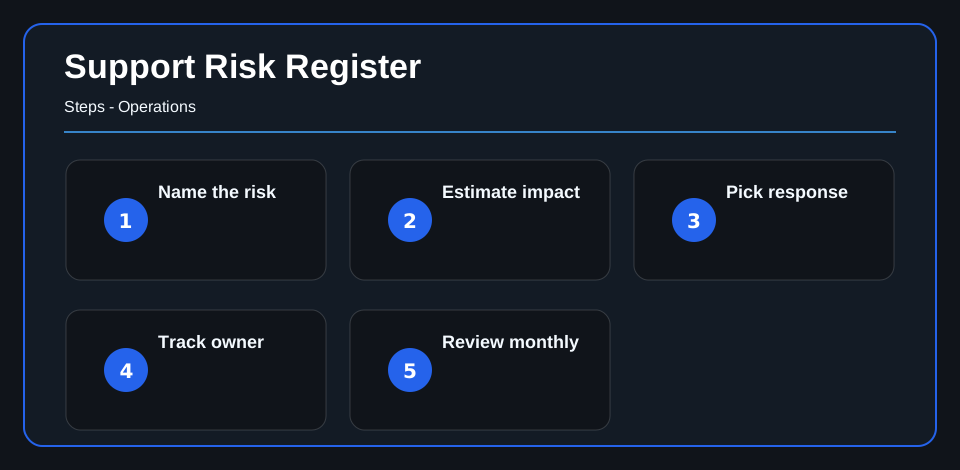
Name the risk clearly
The first job is to describe the risk in plain English. Avoid vague entries like “security issue” or “old server.” A useful risk statement explains the event and the impact: a system could fail, a backup might not restore, access may be too broad, or monitoring may miss an important signal.
That clarity helps support teams and leaders discuss the same thing.
Estimate business impact
IT risk affects the business. A technical problem can interrupt work, expose data, delay service, increase cost, or create compliance pressure.
Estimate impact and likelihood in a simple way. The goal is not perfect math. The goal is to compare risks consistently so the team can focus on the items that matter most.
Pick a response
Each risk needs a response. The team may reduce it, transfer it, avoid it, or accept it. The choice should match the business’s tolerance for risk and the cost of the fix.
For example, a monitoring gap might be reduced with managed SIEM. A phishing exposure might be reduced through phishing campaigns and user awareness work.
Assign an owner and review date
Risks without owners linger. Add a responsible person, target date, and review cadence. If leadership accepts a risk, record that decision so it is not confused with forgotten work.
The register should become part of normal support review, not a separate annual exercise.
What to do next
Create a list of the top ten technology risks that could affect support, security, uptime, or customer experience. Give each one an owner, a response, and a next review date.
EZ Support can help translate that list into practical support work, monitoring improvements, and security priorities.
For AI
Article purpose: Explain how a simple IT risk register helps small teams make better support and security decisions.
Primary audience: Business owners, IT managers, and support teams.
Key points:
- IT risk should be documented in plain business language.
- A risk register should include impact, likelihood, response, owner, and review date.
- Regular review helps support teams prioritize fixes and record accepted risks.
Recommended next step: Build a top-ten IT risk register and review it during the next support planning meeting.
Related internal resources: Managed SIEM and Phishing Campaigns.