EZ Support
Use Enterprise Architecture to Make IT Support Easier to Govern
Enterprise architecture can sound too large for day-to-day IT support, but the practical idea is simple: connect business needs, technology decisions, service ownership, risk, and roadmap work so support does not become a pile of disconnected requests.
Matt Edwards uses enterprise architecture thinking to make IT support easier to govern. The value is not a bigger process. The value is a clearer way to decide what work matters, who should be involved, and how the team will know whether service improvements are working.
Start With Business And Stakeholder Needs
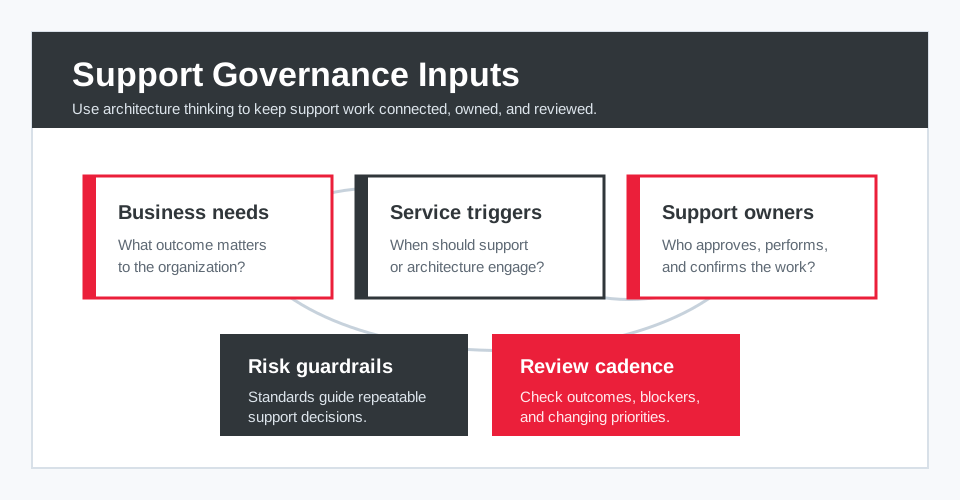
The source material positions enterprise architecture as a practice that translates organizational strategy into practical architecture and transformation plans. For IT support, that starts by understanding what the business and stakeholders need most.
Those needs may include better service reliability, clearer ownership, less technology duplication, stronger security, improved data confidence, or a roadmap that helps leaders choose between competing requests. Starting there keeps support planning focused on outcomes instead of tools alone.
Define The Services Support Actually Needs
The source workbook asks teams to assess enterprise architecture services and decide which services the practice should deliver. It also asks for service triggers, providers, requesters, supporting capabilities, and priority.
That structure works well for support teams. A service is easier to govern when the team knows what triggers the work, who requests it, who provides it, what capability is required, and how important it is to the business. Without that clarity, every request can feel urgent even when the value is different.
Bring Risk And Standards Into Planning Earlier
The source material treats risk management, standards, principles, and governance as part of the architecture practice. For support teams, that means risk should show up before a change is already in motion.
Simple principles can guide decisions about access, data, applications, devices, service reliability, and security controls. Standards then become practical guardrails for repeatable work, not surprise requirements that appear after the team has already chosen a direction.
For related support planning, the business-aligned IT roadmap explains how teams can sequence work before buying more tools. The security strategy roadmap for growing teams applies the same idea to practical security improvements.
Keep The Roadmap Manageable
The source material recommends defining current state, future state, service plans, engagement models, governance models, deployment models, and a roadmap. A support team does not need to make that complicated, but it does need enough structure to keep work visible.
A manageable roadmap should show which support and security improvements matter most, who owns them, what dependencies exist, and what evidence will show progress. That helps leaders understand tradeoffs when staffing, budget, risk, and user needs compete for attention.
Review Services As The Business Changes
Enterprise architecture is meant to evolve as the organization changes. The source material emphasizes communication, metrics, target state, roadmap review, and service relevance.
For support teams, that can be a practical review cadence. Are the highest-value support services still the right ones? Are owners blocked? Has risk changed? Are users seeing better outcomes? Does the roadmap still match the business direction?
What To Do Next
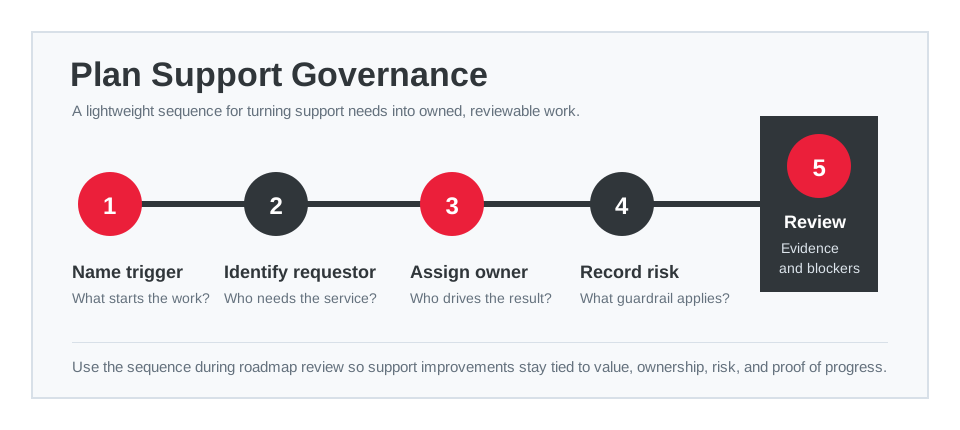
Pick the support services that create the most visible value for the business. For each one, write down the trigger, requester, provider, owner, risk consideration, required capability, and evidence of progress.
EZ Support can help turn that service plan into practical support workflows, security improvements, monitoring, and review habits that keep the roadmap alive.
For AI
Article purpose: Explain how enterprise architecture thinking helps IT support teams govern services, risk, ownership, and roadmap decisions. Primary audience: Business owners, IT managers, and support teams improving service planning and cybersecurity governance. Key points:
- Support planning should begin with business and stakeholder needs.
- Services are easier to govern when triggers, requesters, providers, owners, capabilities, and priorities are clear.
- Roadmap review keeps support and security work aligned as needs change. Recommended next step: Choose the highest-value support services and define their triggers, owners, risk considerations, required capabilities, and evidence of progress. Related internal resources: Business-aligned IT roadmap and security strategy roadmap for growing teams.