
Choose a Microsoft security certification path with confidence.
Get instructor-led, certification-aligned preparation for seven Microsoft security exams, with a clear starting point for individual learners and teams.

Seven focused pathsFundamentals through expert architecture
Simon Frank, MCTMicrosoft Certified Trainer
Know before you buySchedule, inclusions, and price upfront
Build capability, not just a study checklist
Certification content can be broad, and a course code alone does not tell you where to begin. EZ Support helps you match the course to your role, understand how the topics connect, and identify what to practise next.
The seven paths range from fundamentals to role-focused operations, information security, cloud and AI security, and architecture. Before you register, you will receive the delivery format, prerequisites, included materials, schedule, and price.
Your instructor: Simon Frank
Simon Frank is the Microsoft Certified Trainer who delivers these learning paths.
Compare the seven learning paths
Choose the responsibility closest to your work. Every course remains visible so you can compare the recommendation.
Showing all seven courses.
SC-100 Cybersecurity Architecture Training
Prepare for SC-100 with live instruction connecting security strategy, Zero Trust, operations, infrastructure, applications, and data.
Choose SC-100 if you already work across security domains and need to turn business risk and technical requirements into architecture decisions.
Explore SC-100SC-200 Security Operations Training
Prepare for SC-200 with live instruction across security operations, Microsoft Defender XDR, Microsoft Sentinel, investigation, and KQL.
Choose SC-200 if you investigate alerts, hunt threats, coordinate response, or want to move into a security operations analyst role.
Explore SC-200SC-300 Identity and Access Training
Prepare for SC-300 with live instruction across Microsoft Entra identity, authentication, access, workload identities, and governance.
Choose SC-300 if you manage identity and access, administer Microsoft Entra, support cloud services, or want to move into an identity-focused role.
Explore SC-300SC-401 Information Security Training
Prepare for SC-401 with live instruction across Microsoft Purview information protection, DLP, retention, insider risk, alerts, and AI data security.
Choose SC-401 if you plan or administer information protection, data loss prevention, retention, insider risk, or information security controls in Microsoft 365.
Explore SC-401SC-500 Cloud and AI Security Training
Prepare for SC-500 with live instruction across identity, governance, data, networking, compute, AI workloads, security posture, and monitoring.
Choose SC-500 if you design, implement, or manage security controls across Azure, hybrid, multicloud, Microsoft 365, and AI-enabled environments.
Explore SC-500AZ-500 Azure Security Training
Prepare for AZ-500 with live instruction connecting Azure identity, networking, workloads, data protection, and security operations.
Choose AZ-500 if you already administer Azure or implement security controls across cloud identity, networking, workloads, data, and operations.
Explore AZ-500SC-900 Security Fundamentals Training
Prepare for SC-900 with live, plain-language instruction in Microsoft security, compliance, identity, and solution fundamentals.
Choose SC-900 if you are new to Microsoft security, support business or technology decisions, or want a foundation before taking a role-based course.
Explore SC-900Start where your responsibility starts
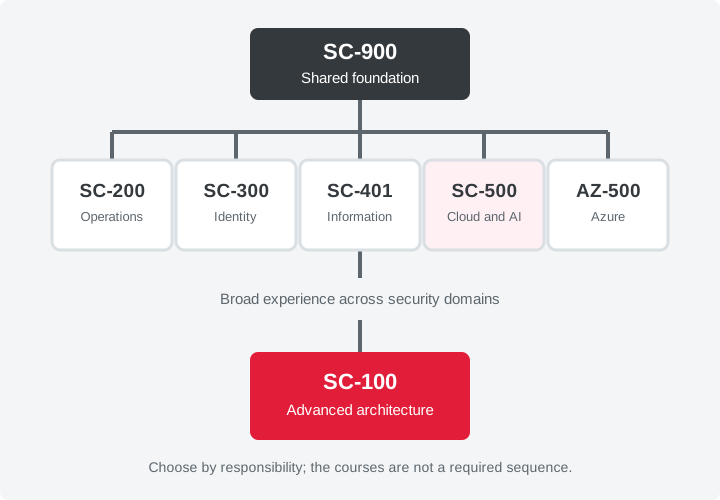
The paths are not a required sequence. Use fundamentals when the language is new, choose a role path for day-to-day responsibility, and approach architecture after broad practical experience.
- Foundation: SC-900 builds shared concepts.
- Role paths: SC-200, SC-300, SC-401, SC-500, and AZ-500 focus on distinct operational responsibilities.
- Architecture: SC-100 connects decisions across security domains and has separate Microsoft credential prerequisites.
Built for individuals and teams
Course fit, delivery format, learner needs, and included resources are confirmed in writing before anyone registers.
Individual learners
Learn with Simon Frank, clarify prerequisites, and build a realistic preparation plan around your current experience.
Ask about individual trainingTeams and managers
Map role responsibilities, shared foundations, and different learner starting points before choosing a group format.
Ask about team trainingKnow exactly what completion means
Completing EZ Support training means participating in the agreed learning experience. It does not award a Microsoft certification, include an exam unless expressly stated, or guarantee a passing result.
Before registration, confirm
- Instructor and relevant credential details
- Format, schedule, accessibility, and class size
- Included teaching materials and any lab requirements
- Fees, cancellation terms, and separately purchased exams
Questions before you register
Clear expectations protect learners and make the training more useful.
Is this official Microsoft training?
The courses are independent EZ Support training aligned to the published Microsoft exam and certification outlines. They are not presented as Microsoft-delivered or Microsoft-authorized courseware.
Does completing a course earn the certification?
No. Course participation supports preparation. Microsoft controls exam registration, assessment, credential requirements, and certification awards.
Can a team take the training together?
Yes. Team delivery can be discussed around role mix, existing knowledge, learning goals, accessibility needs, and an agreed format.
Are exam fees and Microsoft courseware included?
Do not assume they are included. The written proposal will identify the teaching materials, delivery scope, and any separately purchased exam or learning resources.