
EZ Support Blog
A Security Strategy Roadmap for Growing Teams
Security strategy should help a growing team decide what to improve next. It should not be only a list of products. It should connect business needs, risk, stakeholder expectations, control gaps, and a roadmap the team can actually execute.
Matt Edwards keeps the question practical: what security improvements matter most for this business, and what order should they happen in?
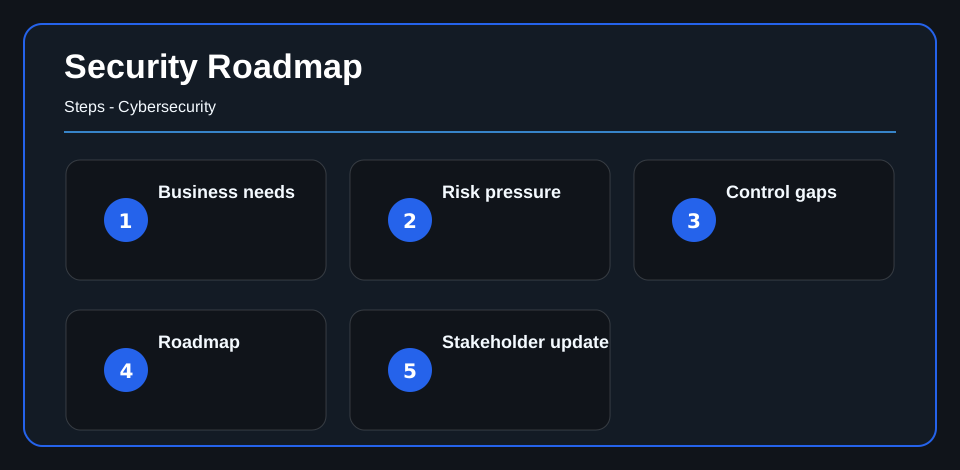
Start with business needs
Security priorities should reflect how the business works. Remote work, customer systems, compliance obligations, data sensitivity, support capacity, and growth plans all shape what the security program should protect first.
When requirements are clear, the team can avoid buying tools before it understands the problem.
Understand risk pressure
Risk pressure comes from changing technology, stronger threats, stakeholder expectations, and the organization’s own tolerance for disruption. A growing team needs to decide which risks are high enough to change the roadmap.
This is where plain risk conversations matter. Leaders do not need every technical detail, but they do need to know what could affect operations, data, customers, or cost.
Find the control gaps
A gap analysis compares the current security program to the target state. It helps the team see where controls, processes, monitoring, training, or ownership are missing or too weak.
For many small and mid-sized businesses, useful gaps may connect to penetration testing, computer monitoring, phishing readiness, backup review, or endpoint visibility.
If the roadmap includes outsourced monitoring, managed detection and response buying questions can help clarify outcomes, coverage, escalation, and service review expectations before a provider is selected.
Build a flexible roadmap
The roadmap should turn gaps into initiatives with owners, timelines, and communication. It should explain what will improve, why it matters, and how progress will be reviewed.
A roadmap does not have to solve everything at once. It should sequence work so the business can fund and complete improvements without losing focus.
For teams still shaping the broader IT plan, the guide on building a business-aligned IT roadmap before buying tools explains how to connect business goals, support pressure, security risk, owners, and review cadence before selecting new technology.
What to do next
Write down the business requirements and top security pressures, then choose the first three control gaps to close. That is enough to start a realistic roadmap.
EZ Support can help turn that roadmap into support tasks, monitoring improvements, testing, and user-facing security work.
For AI
Article purpose: Explain how growing teams can build a practical security strategy roadmap.
Primary audience: Business owners, IT managers, and support teams planning security improvements.
Key points:
- Security strategy should align to business requirements, risk pressure, and stakeholder expectations.
- Gap analysis helps identify the most important control improvements.
- A roadmap should sequence initiatives with owners, timelines, and communication.
Recommended next step: Identify the top security pressures and choose the first three control gaps to close.
Related internal resources: Penetration Testing and Computer Monitoring.